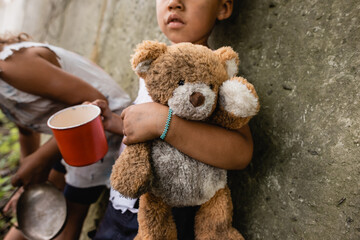
Understanding the Context
Let’s be honest, kids don’t grow up in isolation. The money situation at home? It touches everything in their lives. And in Australia, it’s not just a small group struggling. The latest ACOSS data (2023) shows 757,000 kids about one in six are living in poverty. That’s not just missing out on a family holiday. It means parents are constantly stretching to cover rent, bills, groceries, and bus fares without much of a safety net. Poverty isn’t just about not having cash; it’s mixed up with unstable jobs, soaring rents, weak social support, and sometimes, families locked into this cycle for generations ( Hodge & McMahon, 2022).
If you want to get theoretical, Bronfenbrenner’s bioecological model lays it out: the economy sits outside the kid’s immediate world, but it still impacts their daily life. Poverty exists out in the exosystem and macrosystem, but it pushes its way into the house, the playground, the early learning centre. It shapes routines, relationships, and things like who gets to read or use an iPad. This isn’t breaking news research keeps showing that kids from wealthier families have better health and school results (AIHW, 2020). Inequality is no accident; it builds up over time.
But poverty isn’t the same everywhere. For some families, it’s a short-term struggle. For others, it’s been around since well before grandma’s time. Migrant and refugee families? They’re often under extra financial pressure just trying to find their feet. If you live out bush or in a small town, disadvantage might mean there’s no work or services nearby. You can’t just stick a label on “the poor.” Hardship is slippery, always changing, and never fits in a simple box (Hodge & McMahon, 2022).
Effect upon children and families
So what does all this mean for children and their families? The effects are subtle. Maybe it’s a kid who can’t concentrate at school because he was up all night too many people squeezed into one room (AIHW, 2020). Or it’s missing out on healthy food, decent clothes, or seeing a doctor because the money just isn’t there. Forget having books or a device for homework. And these things last kids from low-income families are much more likely to start school already behind (AEDC, 2021). Only about 60% of young people in poverty finish Year 12, compared to over 90% from better-off homes (The Smith Family, 2023). That’s not just a gap, it’s a gulf.
And then there’s the stress. Parents holding down two or three jobs, just keeping afloat. The mental load is heavy parents get tired, anxious, and sometimes too embarrassed to talk to teachers about what’s happening at home. That awkward silence? It can make it even tougher for schools and services to step in. So if you’re working with these families, you need to meet them where they are. No judgment, just honest conversation and flexibility.
Social Policy & Australian Responses
So, what’s the government actually doing? There’s a patchwork of payments, Family Tax Benefit, Parenting Payment, Child Care Subsidy. They help a bit, but ACOSS (2023) says plenty of families getting these supports are still stuck in poverty. There’s a big gap between what’s on paper and what’s real.
Housing is a huge part of the issue. More families than ever are spending over 30% of their income just to keep a roof overhead (AIHW, 2020). Overcrowding and insecure rentals hit poorer families hardest, and that stress flows straight down to the kids emotionally, physically, and socially.
In early childhood education, there’s at least some good news. The latest EYLF v2.0 and National Quality Standard really focus on fairness, inclusion, and supporting families who are struggling (ACECQA, 2022). These aren’t empty words, they’re a reminder to educators that economic hardship isn’t just “the family’s issue.” It’s everyone’s concern, and it takes empathy, action, and plenty of understanding in practice.
Strategies for Practice
1. Apply a Social-Determinants and Strengths Lens
Viewing children and families through a social-determinants lens allows educators to recognize that things like poverty result from larger economic structures rather than from parents’ shortcomings (AIHW, 2020).
2. Overcome practical and financial barriers
A bit of support makes a big difference. That might mean helping families navigate complicated CCS entitlements (seriously, it’s confusing), offering flexible enrollment options, or quietly helping out with meals, uniforms, or resources when times are tough. Hodge & McMahon (2022) note that, not surprisingly, when these barriers come down, kids attend more and get more involved. Imagine that.
3. Create Low-Price, Inclusive Learning Environments
Who says quality learning has to be expensive? You can create an engaging, high-quality environment without spending a fortune. Use natural materials, recycle, share resources, and don’t ask families to buy pricey extras.
4. Embed Trauma-Aware and Relationship-Rich Practice
Let’s not ignore that financial struggles are often connected to stress, conflict, or trauma. If families are stretched financially, they’re likely under pressure in other ways too. Consistent routines, warmth, and patience matter. Build a space where kids know what’s coming, feel truly cared for, and get help with their emotions. Sometimes, those small daily moments make the biggest impact (AIHW, 2020).
5. Use of Local Data to Advocate
Why not use data to back you up? Dive into AEDC or local stats, see where families need support, and use that info to push for what’s needed breakfast clubs, family workers, extra staff, you name it (AEDC, 2021).
Community and Professional Partnerships
The Smith Family
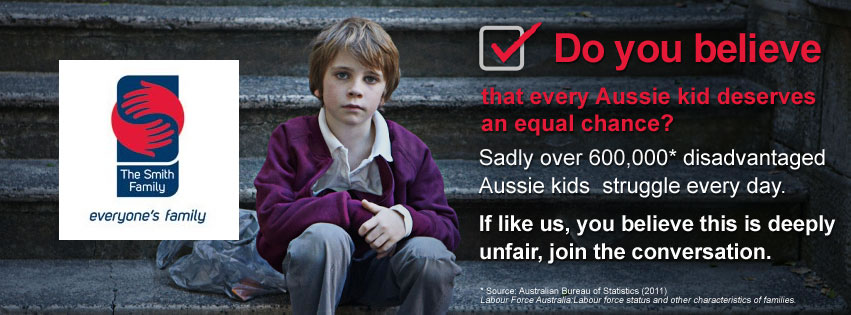
This group focuses on helping with education costs and providing learning support. Educators can connect families for referrals or partner up to make the transition to school smoother (The Smith Family, 2023).
Mission Australia
If families are facing homelessness or unstable housing, Mission Australia can help. Working together helps keep kids in early learning even when things are rocky at home.
Anglicare / Uniting
For emergency support, financial advice, or parenting help, these organisations are there. They don’t just handle material needs—they support families emotionally too, which is just as vital.
Financial Counselling and Legal Centres
When families have debt, tricky landlords, or problems accessing entitlements, these centres guide them through it. Educators should share this info quietly and respectfully no one likes feeling judged.
Community Hubs / Neighbourhood Houses
Playgroups, shared meals, a place to connect these spaces build community and give families a sense of belonging. Getting involved can make a huge difference, especially for those who feel isolated.
Resources for Educators and Children
Professional Resources
Be You — Advising on impact of economic factors on mental health.
AEDC — Find data stories to guide planning for equity.
ACOSS Reports — Clarity of poverty trends and policy requirements.
Centre for Community Child Health — Evidence briefs on disadvantage.
Children’s Books
Those Shoes — Encourages empathy and understanding of needs.
A Shelter in Our Car — Gives a gentle introduction to homelessness.
A Chair for My Mother — Demonstrates community compassion and hope.
Maddie’s First Day — Looks at starting school with realistic worries.
Media Resources
Play School episodes on families and feelings.
Sesame Street segments on hunger and emotions.
ABC Kids Listen stories about neighbourhoods.
Short videos about education and opportunity from The Smith Family.